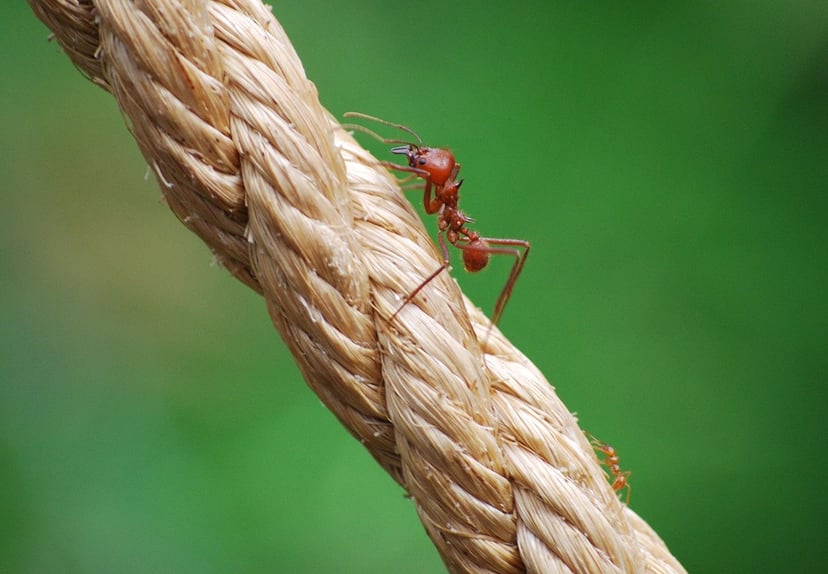
Flying ants can appear suddenly in gardens, pavements, kitchens, conservatories, and around windows. The surge is often called Flying Ant Day, although it is usually a short flying-ant season rather than one single day across the whole UK.
In Scotland and the wider UK, swarms are most common during warm, still, humid weather in summer. If ants are flying outside for a day or two, it may pass on its own. If ants are repeatedly entering the property, appearing in a kitchen, or emerging from wall gaps, it may need treatment.
For general prevention steps, see how to get rid of ants. For professional help, use pest control services or local pest control in Edinburgh, Glasgow, East Lothian, Midlothian, or West Lothian.
What Is Flying Ant Day?
Flying Ant Day is the name people use when large numbers of winged ants leave their nests to mate and start new colonies. The ants are usually black garden ants, and the flying ants are reproductive males and queens.
Several colonies can swarm at the same time when conditions are right, which is why the activity can feel like it has appeared everywhere at once.
Why Are Flying Ants in My House?
Flying ants may get indoors by accident through open windows, doors, vents, air bricks, or gaps around frames. They may also indicate an ant nest close to the property if they are emerging from:
Cracks around skirting boards
Gaps near patio doors
Conservatory edges
Wall or floor junctions
Kitchen units or utility rooms
External paving close to the building
One or two flying ants indoors is not usually a major issue. Repeated activity from the same gap is more likely to mean a nest nearby.
Are Flying Ants Dangerous?
Flying ants are not usually dangerous. They are mostly a nuisance pest, especially when they gather around windows, worktops, food areas, or customer-facing spaces.
The main concern is hygiene and recurrence. In homes, ants can contaminate food preparation surfaces. In restaurants, hotels, care settings, schools, and rental properties, recurring ants can create complaints and inspection issues.
Commercial sites should check commercial pest control, restaurants and food businesses, hotels and hospitality, or schools and education.
What Should I Do Today?
Close windows and doors near the swarm
Wipe down ant trails with soapy water
Remove exposed food, crumbs, and pet food
Empty indoor bins and rinse recycling
Vacuum dead or live flying ants indoors
Check where ants are entering before sealing anything
Do not spray blindly into electrical sockets, wall voids, food cupboards, or ventilation routes. If the activity is coming from a hidden void, treatment is safer and more effective when the source is identified first.
When Should You Call Pest Control for Flying Ants?
Book professional pest control if:
Ants return for several days
Ants are entering a kitchen or food storage area
You can see ants emerging from a wall, floor, or unit gap
DIY bait or sprays have not worked
The property is a business, rental, school, care home, or hospitality site
You need evidence of treatment or a pest management record
The aim is not just to kill visible flying ants. The useful work is finding the nest route, treating the active area, and reducing the chance of repeat activity.
Flying Ant FAQ
How long does Flying Ant Day last?
Outdoor swarms often settle quickly, sometimes within hours. Local activity can continue across several days if multiple nearby nests swarm in suitable weather.
Should I seal the gap straight away?
Only seal gaps once you are confident activity has stopped and the nest route has been dealt with. Sealing an active route can push ants to find another way indoors.
Do flying ants mean I have an infestation?
Not always. A brief outdoor swarm is normal summer behaviour. Repeated indoor ants, trails, or ants emerging from the same internal gap suggest a nest or entry route that may need treatment.
Can Antiva help with flying ants?
Yes. Antiva provides domestic and commercial pest control for recurring ant activity, including properties in Edinburgh, Glasgow, East Lothian, Midlothian, and West Lothian.